Window Support Software

  • Subscribe to our RSS feed.
  • Twitter
  • StumbleUpon
  • Reddit
  • Facebook
  • Digg

Wednesday, 4 December 2013

How To Tackle The Buffer Overflow Situation

Posted on 01:04 by Unknown
Normally a program runs on a sufficient amount of memory. However, when the program consumes more memory than required, a phenomenon called buffer overrun or buffer overflow is experienced and this causes loss in data and decrease in performance. The buffer-overrun situation can be tackled in a number of ways. The Windows operating system files have to be updated and the Data Execution Prevention (DEP) has to be enabled. The security level of the Internet Explorer has to be increased if the buffer overrun starts from the Internet Explorer. By following the below provided Windows support guidelines, you can restrict the buffer overrun situation.

Performing a Windows update
  • You have to select the Start button and the Start menu will appear. From the Start Menu, you have to choose All Programs and then you have to choose Windows Update.
  • Choose the Check For Updates option that is visible in the left pane. Now Windows will check for the required updates and install them on your system.
  • When the installation of the updates is complete, you have to restart your system.
Enhancing the security level in the Internet Explorer
  • You have to access the Internet Explorer. From the different menus that are present, you have to choose the Tools menu and click on Internet Options.
  • The tab titled Security has to be selected.
  • Under the heading Security Level For This Zone, the sliding bar has to be selected and increased all the way to High.
  • Now you have to select the Apply button and choose the Ok button.
Turning on data execution prevention
  • You have to select the Start button and the Start menu will appear. From here, you have to choose Control Panel. From the Control Panel window, you have to select System and Maintenance. Now you have to choose the System tab.
  • The Advanced system settings option has to be selected and if asked, you will have to enter the administrator password.
  • Under the Performance section, you have to select the Settings option. Now, the tab titled Data Execution Prevention has to be selected.
  • Click on the Turn On DEP For All Programs And Services Except Those I Select option.
By following these Windows support guidelines, you can address the buffer-overrun situation with ease. If you have any queries regarding this process, you may contact Microsoft help and support for any further assistance.
Read More
Posted in Data execution prevention, Windows support | No comments

Monday, 11 November 2013

Interact-Interact v7 Widget Sizes

Posted on 12:46 by Unknown
I'm just getting my feet wet with the responsive framework of Interact-Intranet v7 and the widget design challenges that go along with that. 

When our v7 instance loads, for a heart-beat we see a light-grey widget outline which quickly fills in with content.  It looks as though the canvas accommodates 4 vertical columns on the landing homepage and 3 on subsequent area homepages due to the side navigation consuming a column.

Click the image for a larger view


When I added the Twitter widget I noticed that while it looks good on my 1280x1024 monitor it doesn't fully display on my 1024x768 monitor (employee standard).  I could have guessed a few times and probably come up with a good size, but knowing the widget sizes and understanding how they work is pretty important so I thought I'd put in some due diligence.

To help me figure out common widget sizes, specifically for the smaller widgets, I typically create free text widgets that include a simple 100% x 100% table with a colored background.  Then I take a screenshot of what I'm looking at and use Paint to figure out the dimensions.  With v7 I've run into an issue embedding a table into the free text widget so I did the next best thing - inserted a square red image!  I initially used a 1278x990 image, but later scaled it down to 280x280 because of issues I was running into with spacing issues caused by the image being rectangle. 

Click the image for a larger view


Note: These test were done in IE10.0.  I found that using Firefox altered the widget sizes slightly (2px difference at both sizes w/o a title).

The next test I ran was to determine the impact of resizing on the content of an image.  For this I used a 1k x 1k image of horizontal and vertical lines.  The result is that the image appears to automatically resize based upon width.  Because the widget sizes are fixed and images are aligned to the top, the bottom of the image is cut off.

Click the image for a larger view

What does this all mean?

If you are going to use an image in a free-text widget you would be advised
to not include a title since the title seems to have priority and the image is secondary.  Additionally, titles can wrap depending upon the resolution the page is viewed at which can cause a fairly significant difference in the amount of image height that displays.

What happened to the Twitter widget?

In the end I settled on a Twitter defined widget size of 275px (height) which displays the full widget at 1280x1024 and enough of it at 1024x768.
Click the image for a larger view
Read More
Posted in | No comments

Wednesday, 30 October 2013

Windows 8.1 RTM Version Released

Posted on 04:39 by Unknown


Microsoft recently let its hardware partners get their hands on the final Windows RTM version, Windows 8.1 or Windows Blue OS. Microsoft commented on this release saying, "Unlike past RTM moments, this milestone represents progress in Microsoft’s new rapid release cycle and optimizes the overall customer experience, while highlighting the handoff to OEM partners and wide array of devices expected this fall".

The RTM version was released so that PS manufacturers and other hardware companies can tinker with the RTM version and come up with new products and devices. Microsoft expects a wide variety of innovative products that their customers can use, which will be rolled out later in the holiday season.

The company added the people around the world should expect a wide range of sophisticated and beautiful devices ranging from tablets, lightweight notebooks and versatile hybrids, including an array of devices aimed specifically for the business ecosystem.

However this arrival shouldn’t come as a surprise, as Tami Reller, Microsoft’s Chief Marketing Officer had announced at the company’s Worldwide Partner Conference that the RTM version of Windows 8.1 would be released by the end of August.

Microsoft has made some drastic improvements to the Windows 8.1 operating system. It looks like the traditional Start menu will be returned, and an option to switch between regular interface and Metro Style interface can also be expected. Other improvement include the Internet Explorer 11, improved performance, and better cloud connectivity. This is great, as usually Microsoft releases only Service Packs, and OS upgrades do not happen so quickly. Looks like Microsoft is introducing the concept of quicker software upgrades, to win back its position as one of the best software companies. Along with Windows 8 powered touch devices, Microsoft could soon become a major competition for giants like Android and Apple.

Those hoping to make a Windows 8 transfer to the updated OS can get their hands on the OS easily, from the Windows Store. This upgrade is absolutely free for those who have already migrated to the Windows 8 operating system. If you are currently using the previous versions of Windows like Windows 7, Vista, or older, you will have to pay the retail price for upgrading to Windows Blue. The Windows 8 transfer to Windows 8.1 should be a relatively simple process, and easy to migrate.

Microsoft concluded by saying, "Thanks, in part, to customer feedback and an unparalleled level of collaboration across product teams, Windows 8.1 is a significant update. We have delivered in a very short time an update to the OS that will bring an even greater unified experience for our customers."
Read More
Posted in Windows 8 transfer, Windows Blue | No comments

Tuesday, 29 October 2013

Fixing Issues With Help And Support

Posted on 03:30 by Unknown

Whenever you require help with your Windows OS, you can always depend on the Microsoft help and support for troubleshooting. Microsoft help and support provides the best help tips for all your Windows queries. So when you access a help link, an executable called HelpPane is accessed by the system. The HelpPane accesses the information in the help files that are present in a separate folder and these files are shown on the help window. However, sometimes the files can get damaged and the help files become inaccessible. By following the below provided Windows 7 support guidelines, issues with the help files can be sorted out.

Instructions


  • Reboot the system. Tap the F8 key until the Advanced boot options window appears.
  • Choose Windows Safe Mode and tap Enter to start Windows.
  • In order to access the Run command, tap Windows and R keys simultaneously in the keyboard. In the window, enter C:\Windows and tap the Enter key. Now, on a new window, the Windows directory will open.
  • Locate the HelpPane file and right click on it. Select Rename and the name has to be changed to HelpPaneBackup. The files will be sorted alphabetically by default. If the HelpPane file cannot be located easily, in the empty area, you have to right click and choose the option labeled Sort By Name.
  • Select the Start button and choose All Programs. Click Accessories and in the Command prompt option, right click. Now a menu will appear and you have to choose the option Run As Administrator. 
  • Now you can run Command prompt with administrative privileges.
  • Enter SFC /ScanFile=C:\Windows\HelpPane.exe and tap the Enter key. Now the system file checker will check and repair the file.
  • After the process is complete, when asked, restart the system. If help and support still fails, you have to perform the next set of steps.

System Restore

  • In order to access the Run command, tap Windows and R keys simultaneously.
  • In the Run field, enter Rstrui.exe and tap the Enter key. Now the System restore utility will open.
  • Select Choose a Different Restore Point and click on the Next button. Now a window containing a number of restore points will appear.
  • By checking the date and time column, choose a restore point when you think the help and support worked properly. Now select the Next button.
  • In the Confirm Your Restore Point window, choose the Finish button. Now the computer will restart and the system will be restored to the selected date.

By following these Windows 7 support guidelines, issues with Microsoft help and support files would be resolved.

Read More
Posted in access a help link, Windows 7 Support | No comments

Tuesday, 22 October 2013

Deleting AutoComplete Entries In Outlook

Posted on 21:41 by Unknown
Your Outlook is not just a mere email client; it is a very efficient personal manager tool. MS Outlook can help you take notes, make journals, set appointment, generate tasks, manage contacts, keep connected with people. Outlook 2007 is empowered with the AutoComplete feature. This feature directly saves the names and email addresses of any person you sent mail to, who are not already on your contacts list. These entries may crowd up your contacts so here are some steps to delete them.

Instructions to Delete all AutoComplete entries:
  •  Close the Outlook application.
  • Your AutoComplete entries are saved in a location. Find out this location by clicking on Start in your desktop. Select the Computer option and then enter the following location in the file pathway box at the top of the window %USERPROFILE%\AppData\Roaming\Microsoft\Outlook.
  • Turn your option to view file extensions on. This can be done by clicking on Tools menu at the top of your window. In the menu select the Options button and then click on View tab. Remove the check mark from the checkbox next to Hide extensions for known file types. This will permit you to look at all files and their extensions as well. Click OK.
  • Locate the Outlook.NK2 file and delete it. Only delete the file ending in NK2 and nothing else. As there are other files that have Outlook in their names, make sure you do not delete any other file.
Instructions to Delete Specific AutoComplete Entries:

You can choose to delete only specific entries if you want and here is how you do it;
  • Open the Outlook application and then select the Mail section, which is located in the left-hand navigation pane.
  • Click on the New button at the top of the window, right below the menu options, to open an new mail.
  • Type in the name email address of the mail that you wish to delete from the list. That email address will be visible in the line of text where you are typing.
  • Press the down arrow key to and then press Delete to remove this from the list of entries.
Now, you can choose to delete any further entries you want individually. If you face any issues on Outlook 2007 feel free to contact Outlook tech support. Expert at Outlook tech support are dedicated to providing quick and effective solutions for all your Outlook problems. Enjoy Outlook 2007 and all its splendid features.
Read More
Posted in Outlook 2007, Outlook tech support | No comments

Steps To Set Up The Email Filter In Outlook

Posted on 21:38 by Unknown
As we all know, Microsoft Outlook contains some of the most advanced and novel features which help users to remember and organize their important events. These include features such as calendar, task manager, event manager, note making, journals, and so on. Hence, the Outlook application is also used as a personal information manager along with being an email application. Outlook stores the information of the users in files known as personal storage tables or .pst files. Another feature of Outlook is the spam filters that allow you to filter the email that you receive. Hence, you would not get unwanted emails into your inbox. Outlook can be set to block these senders and their emails, sending the former to the trash folder until you wish to unblock the latter. Microsoft provides this feature in all versions of Outlook.

You can follow this procedure to filter email in Outlook before seeking assistance from the Windows tech support.
  • In the first step, click the Windows Start button. Now, select the All Programs option, and you would see a list of all the programs currently on the computer. Now, click Microsoft Office.
  • In the Microsoft Office, select the Outlook shortcut to open the Outlook email client on your desktop.
  •  Now, click the Tools menu item, and then select Options. In the list of options, click the Junk E-mail button. A window would open where you can set up all of your email filters. You can also contact the Outlook support to get more information about spam filters in Outlook.
  • Now, click the Blocked Senders tab. Make sure you click the users in the list of senders that you want to remove. Click Remove to enable the user to send email. This means that the user's email in Outlook is no longer sent to spam, so the sender can send email to your inbox.
  • Now, click the Add button. Here, a dialog window would open where you need to add a new filter. Type a sender name you want to filter from your inbox, and click OK to save the settings. You can notice the newly filtered email that would display in the list of blocked senders.
  • After you complete the list of filters, click OK to save your settings. The settings take effect immediately, and hence, the senders are filtered the next time they attempt to send email to your address.
Therefore, you can follow these simple steps to set up the email filter in Outlook. For more information on this, check Microsoft’s official website.
Read More
Posted in Email in Outlook, Task manager | No comments

Minimum System Requirements To Upgrade to Windows Vista

Posted on 21:36 by Unknown
Are you thinking of upgrading your Windows XP computer to Windows Vista? Upgrading to Vista will be a smart choice as it definitely improves your system performance, given you have the right system requirements to run the operating system.

The following list describes the recommended minimum hardware requirements for the basic functionality of the different editions of Windows Vista. Actual hardware requirements will vary, depending on the system configuration and on the programs and the features that you install. If you install Windows Vista over a network, additional hard disk space may be required. For your computer to run Windows Vista operating system, it should have a modern processor (at least 800MHz), 512 MB of system RAM and a graphics processor that is DirectX 9 capable.

These Windows Vista Help guidelines will help you determine the minimum system requirements for your computer.

Instructions

  • Go to the Start menu located on your Windows taskbar and locate the option My Computer. Right-click on My Computer and choose the option Properties from the popup menu. This will bring up the System Properties window. 
  • By default, the General tab will be active, where you will be able to find your current Microsoft Windows version, system processor, memory (RAM) details etc. The amount of memory will be expressed in terms of megabytes or gigabytes. Though the minimum amount of RAM required to run Vista is 512MB, it is best to have at least 1GB of memory installed before you upgrade to Windows Vista.
  • Here, you can also find the type of processor in your computer. Microsoft suggests having a processor with a speed of at least 800MHz. If you have a faster processor, more efficient will be your computer.
  • Now close the System Properties window. Once again go to the Start menu and click on My Computer to open the My Computer window. Right-click on the C: drive and choose the option Properties.
  • Here, you will be able to check how much space you have on your hard disk. To install Windows Vista, you need to have a drive with a capacity of at least 2GB. Also, you will need at least 15GB of free space on the drive.

If you face any trouble upgrading to Windows Vista, you can always get Windows Vista Help from the Microsoft Support Center and get the issues resolved quickly.
Read More
Posted in Minimum hardware requirements, Windows Vista help | No comments

Getting Rid Of The AVG Toolbar

Posted on 21:34 by Unknown
A toolbar is designed to ease your work by providing useful functions and features, news and information and even links to your social media sites. The user downloads some toolbars while some others are installed on the system during the download and installation of other programs. Users have varying priorities for toolbars. While some consider them to be helpful, others consider it as a nuisance. You may be able to delete the toolbar directly or make use of an application like a toolbar remover in order to remove the toolbar.

By following the below provided steeps, you can easily delete a toolbar like the AVG toolbar easily from your web browser.

Deleting the toolbar using the inbuilt uninstaller of the AVG toolbar

  • Launch the Internet Explorer web browser in your system.
  • Next to the AVG logo on the AVG toolbar, there will be an arrow button present and you need to click on it.
  • An option called Uninstall AVG Security Toolbar will be present. You need to select it.
  • You will require selecting the option, Remove The Toolbar And AVG Secure Search and you need to select the OK button in order to uninstall the toolbar from your system.
Uninstalling by making use of the AVG toolbar remover

  • You have to access your web browser, navigate to the AVG page, and from there download the AVG toolbar remover program.
  • The time taken for the download will depend upon the speed of your internet connection. After the download process is complete, you will require running the program.
  • The license agreement will appear on screen and you need to select the Accept button. In order to start the uninstall process, you have to select the Continue button. When the Continue option has been clicked, all the running browsers on your system will be automatically closed.
  • Once the uninstall process is complete, you need to select the Exit button in order to close the application. Now the AVG toolbar will be successfully removed from your system.

By following these steps promptly, you can remove AVG toolbar from your system quickly. If you have any doubts on how to remove AVG toolbar, you can contact AVG support center to resolve your problems. You may also refer the help topics in the Microsoft help and support page for further assistance.
Read More
Posted in Ease your work, Remove AVG toolbar | No comments

Wednesday, 9 October 2013

How To Get Rid Of Malwares Using Malwarebytes

Posted on 22:23 by Unknown
Computer security is much relevant these days, and you have to take adequate security measures to protect your system from malware programs. There are different kinds of malware programs such as viruses, spyware and worms.
Viruses need a host program to infect, whereas worms don’t need the same. Hackers use spywares to steal our personal information and browsing habits. Hackers make use of these virus programs to hack into others computer and servers. The internet is the main source from where your system gets infected, so it is advisable to be cautious while surfing the net.
If your computer is infected by malware programs, you have to remove them as soon as possible. A number of antimalware programs that provide real time protection for your computer are now available.
Malwarebytes is such a program which provides good protection for your computer. This is a freeware program which scans and removes viruses and other threats from your computer. Periodically updating this program can help keep your system safe from new threats.
Try the following steps to use the Malwarebytes software to scan and remove the various kinds of malwares from your computer.

Steps to Follow
  • Open the Malwarebytes software on your computer.
  • If the updates are available for your software, click Yes to download the latest version of the database and install it on your computer.
  • You can see several scanning options and check the box near to the option that you want to use. Usually the default setting is Perform Quick Scan. If your computer is not heavily infected with viruses, this is the best option for scanning.
  • To start the scan, click the Scan button on the software. If you select Quick Scan, it will take several minutes to complete.
  • Once the scan is completed, click OK. You can see a scanning log if your computer is not infected by viruses. If your computer is infected, you will be asked to remove the malwares.
  • Check the box near to the option Deleted Threats and click the option Remove Selected Button.
  • If you are asked to reboot, do so to remove malwares that are detected.
Hope you have got a clear idea about how to use antimalware programs to remove the malwares. If you follow the above procedure, you can easily remove malwares from your computer.
Read More
Posted in Antimalware programs, Remove malwares | No comments

Sunday, 6 October 2013

Fix Your Xbox 360 Controller

Posted on 21:37 by Unknown
So, you come home tired on a Friday night hoping to lift your mood by playing your favorite game on your Xbox, but something is wrong. The console seems to have stopped working. What do you do? Well if your Xbox is facing some issues then the best option you have is to get it fixed by the developer, Microsoft itself. It is recommended that you do not tinker about with a malfunctioning Xbox unless you are certain about what you are doing. So how do you get in touch with them? Here are some tips to help you with the procedure.

Instructions
  • Are you still in your warranty period? If you have not voided your Xbox warranty. then you have absolutely nothing to worry about. Make sure that you do not dismantle your Xbox. or make any changes for that matter. If you void the warranty, you cannot get it fixed by Microsoft. Remember to hand over the Xbox exactly as it is.
  • Why not contact the Xbox customer support number? Look up their number online, and call them up. Go through the automated system, following instructions, and specify your current issue. Make sure you get to talk to a Microsoft support representative for Xbox.
  • Convey your problem clearly to the customer care representative. Give all relevant information and answer all their queries. Soon a box will be dispatched to you, in which you can pack up your Xbox 360 and send it over to Microsoft for repair.
  • Follow the instructions on the box exactly as written. Pack your Xbox 360 and send it for repair to Microsoft. Within a week or so Microsoft will return your Xbox 360 console fully repaired and operational. If a serious damage was exposed, you might even get a brand new controller at home.
Now that your Xbox 360 controller is fixed, get back to your favorite games and relax. Xbox 360 is one of the most famous gaming consoles, and there are tons of cool games you can play.
If at any time you experience trouble with your Xbox 360, you will get excellent Microsoft support, and they will resolve your every issue. They have a department dedicated to fixing issues with their gaming consoles, who provide quick solutions. Also, check up on the Xbox One controller, which will be hitting the markets this year sometime, around the holiday season. So sit back and play your favorite game on your Xbox 360 controller.
Read More
Posted in Microsoft support, Xbox 360 controller | No comments

Sunday, 25 August 2013

Configure Windows Live Or Hotmail Account In Your IPhone

Posted on 21:57 by Unknown


IPhone lets you configure your email accounts in it, and now, if you have a Hotmail account, we will give you tips on how to configure that on your iPhone. In normal cases, all you need is your email address and the password of that email account. IPhone would automatically go online, obtain the settings, and configure your email. However, in some cases this might not work, and you may require to verify the settings manually. Before you contact Windows Live chat support to fix the issue, follow the guidelines below if you want to fix the issue for yourself.

Instructions

  • Start your iPhone. Find the Mail icon, which is found at the bottom. In the next window, you will find the list of service providers.
  • Next, hit the Other option, then Add Account, and this will help you to set up the email on your iPhone. All you need to do is follow the simple commands on-screen and add your email address and password.

Now, if you have added your email account and then you are unable to connect to your account, then follow the steps below.

  • Hit Settings. On the Settings window, choose Mail, Contacts, Calendars.
  • Choose the Add Account option and then select Add Mail Account.
  • Select the Name option and enter your name. Enter the email address carefully near the Address space.
  • Select Next. This step will enable iPhone to go online and verify the settings.

The below steps will help you to verify the settings and correct them if you find them wrong.

  • Choose the Email account setting and then the option Windows Live account.
  • Select Host Name, and then enter pop3live.com.
  • Choose SMTP, and enter smtp.live.com.
  • Select Advanced.
  • Choose On in the Use SSL field.
  • Select Authentication and then the option Password. Enter the password for your email address carefully.
  • Choose Server Port, and enter 995. This is the incoming port number for your email address.
  • Select SMTP and then choose the option SMTP Live. Select Server Port and enter 587. This is the outgoing port number of your email address.

Once you finish with the above steps, try to send a test mail and verify if it is successful. However, if the above steps did not help you to fix the troubles with your email, then contact Windows Live chat support to troubleshoot the issue.
Read More
Posted in Email accounts, Windows live chat support | No comments

Friday, 9 August 2013

Setting A New Sound For New Mail Alert In Microsoft Outlook

Posted on 01:44 by Unknown

Are you bored with hearing the same little chime each time you get a new message in your Outlook email application? Yes, it can get boring. That is why Microsoft Outlook has a variety of options to customize - to keep you interested. Instead of the rather boring little chime, you can set a little ditty or an announcement message like “You've got mail!” as your message alert in Outlook application.
Setting a new email alert sound in Microsoft Outlook is pretty easy. The following Microsoft help instructions will tell you how.

Instructions

If you are using Windows 2000
  • Close the Outlook application if it is open.
  • The audio file that you wish to use for your new email alert should be of the .wav extension.
  • Go to the Start menu and click on Control Panel to open the Control Panel window.
  • Locate the Sounds and Multimedia icon and double click to open it. Now click on the Sounds tab and then click the Sound Events option. Further click on Windows and then select New Mail Notification.
  • Now it is time to select the audio file. Click the Browse button and choose the .wav file from your hard disk drive. After selecting the file, click the OK button.
  • Launch Microsoft Outlook application and check to see if you can hear the new sound for your incoming email alert.
If you are using Windows XP
  • From the Control Panel window, open the option Sounds, Speech and Audio Devices. Now select Sounds and Audio Devices.
  • Click on the Sounds tab and further click on Program Events. Proceed by clicking Windows and then New Mail Notification.
  • Now click on Browse button and select the .wav file from the hard disk drive. Click the OK button.
  • Launch the Outlook application to hear the new incoming email alert sound.
If you are using Windows Vista
  • The procedure is almost the same with Windows 2000 and XP. The only difference that you will find in Vista is with the Control Panel option.
  • In Control Panel, you need to select Hardware and Sound. Then click on the Sound option. Next, click on the Sound tab, then Windows and then New Mail Notification.
  • The rest of the procedure is the same as in the last case.
See how easy it is to change the incoming mail alert in Microsoft Outlook application. Start checking your new emails listening to something that soothe your ears. Visit Microsoft Help and Support Center if you need further assistance.

Read More
Posted in Microsoft Help, New Mail Notification | No comments

Tuesday, 30 July 2013

How To Stop Windows Vista From Changing Desktop Icons Automatically

Posted on 04:21 by Unknown
Despite being one of the commonly used Windows operating systems across the globe, there are times when Windows Vista operating system starts showing up errors and glitches. Well, you cannot really come across any gadget or software that does not err. All that matters the most is what on earth you can do about it to get it fixed at the earliest.

When it comes to Windows Vista, there are a number of ways by which you can get back the operating system work at its peak performance. One of the common issues associated with the OS is that at times the size and the placement of desktop icons are changed automatically. As aforementioned, there are some easy and fast ways to get this fixed. Follow these simple guidelines from our Windows Vista help team to fix this issue.

Fixing Vista Problems
  • You can start out the process by clicking on the Windows Start menu located on the left side bottom corner of your computer screen. There is another way to access the Start menu and that is to press the Windows key on your computer keyboard.
  • Next up, you need to click on the icon that is labeled by Control Panel from the list of Start menu options. After that, in the Control Panel window, click on Folder Options followed by Show Hidden Folders and then press the OK button.
  • Now, you need to double click on the Users option and select your user name. Choose AppData and click on the option named Local.
  • Once you do that, you need to go through the list of applications until you locate the option named IconCache.db. Right-click on this, and select Delete and hit the OK button for confirming your choice. After that, you need to close down the window.
  • Following which, you need to right-click on the icon for Recycle Bin on the desktop and select Empty Recycle Bin and click on the OK button. When you delete the file from the Recycle Bin, it will be permanently removed from the corrupted icon files on your computer.
  • Lastly, you can finish off the process by restarting your computer. Doing so will make your Vista computer rebuild the icon cache.

So, that was some information to force your Windows Vista computer to stop changing the icons. For further information or if you unlikely get in to any issues while trying to perform the above steps, please feel free to get in touch with our Windows Vista help team.
Read More
Posted in Vista problems, Windows Vista help | No comments

Friday, 19 July 2013

Interact Intranet: Diagnosing problems with AD sync

Posted on 13:19 by Unknown
From time to time you might notice issues with accounts in your intranet not properly synchronizing with your AD system.  If this is the case the first step is to contact support which will give you the fastest resolution to your problem.

If you are handy with SQL and AD you can try to identify the issue yourself by examining the AD sync logs which are stored in a table called UMI_audit.

This query will return any errors from the last two weeks:
    select * from UMI_audit where errormsg is not null

The most common issues we encounter with AD sync are accounts that have been orphaned as a result of incorrect expiration.

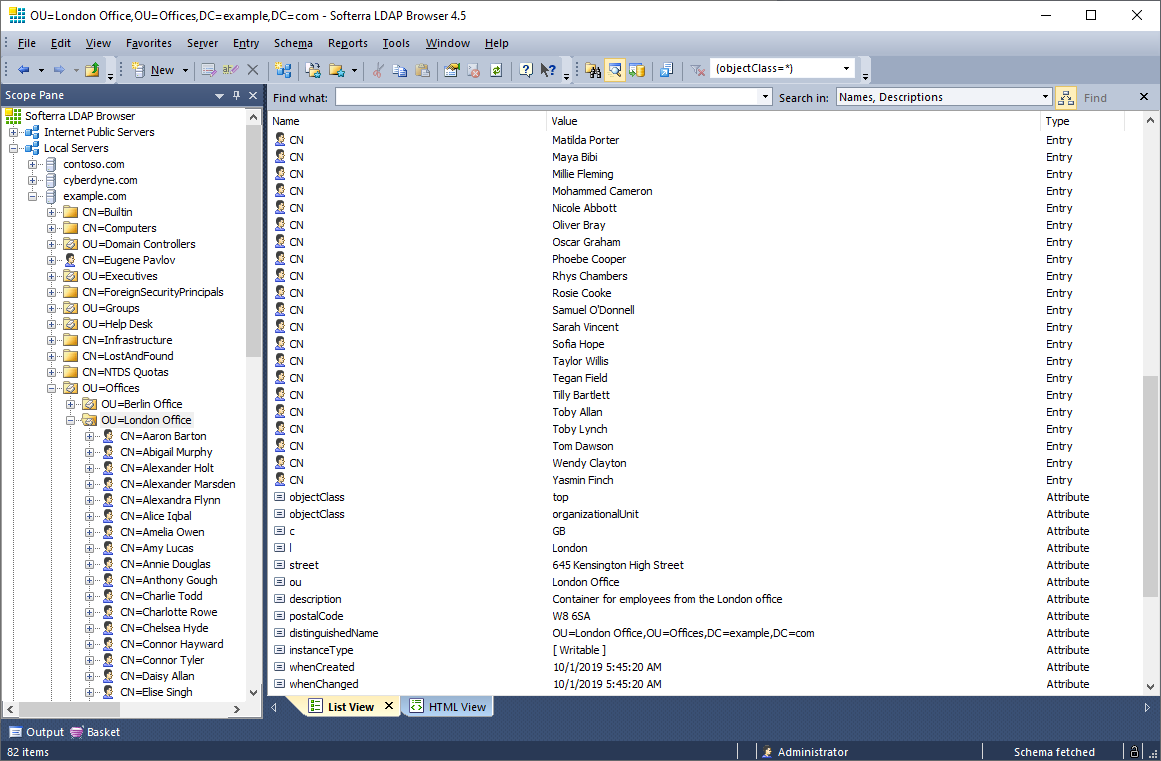
If your IT department isn't willing to give you AD access and you aren't sure how to verify data on the AD side, I'd recommend installing Softerra LDAP browser.  With a minute or two of configuration you'll have a READ only view into your organizations AD system.

Softerra LDAP Browser is a lightweight version of Softerra LDAP Administrator. It supports read-only operations that do not modify LDAP directory data, e.g. browsing, search, export, etc. For complete, fully functional management of LDAP directories you need Softerra LDAP Administrator.

Softerra LDAP Browser is the industry-leading software for browsing and analyzing LDAP directories. It provides a wide variety of features for handy viewing of directory contents, getting information about directory infrastructure and objects.

Right after the very first release Softerra LDAP Browser has become a real breakthrough in IT market thanks to its simplicity and power in equal measures. The software holds highest positions for 10 years already. Some of its features are unique - to date there is anything to match their efficiency in the existing LDAP software packages.

Read More
Posted in | No comments

Intranet, Portal, Social Network, Community vendor list

Posted on 07:56 by Unknown
In my opinion, the days when intranets were distinct from social networks is behind us.  Most intranet vendors these days include every social feature that social network vendors offer, and vice versa.    Similar to the transition half a dozen years ago when the term intranet consumed the notion of portals.

Below is a list of a few vendors that brand themselves as social, intranet, portal and community providers.  Feel free to email me or comment below if I'm missing anyone.

Acquia
Anahita
Atlassian - Confluence
Big Tent
Bloomfire
BlueWiki
BoonEx
BrightSpot
BuddyPress
Chatter
CommunityFire
CrowdVine
Elgg
Elgg Social
eXo
Fuze
Grou.ps
Groupiest
Grouply
GroupSite
IBM WebSphere
Igloo
INGage
Interact-Intranet
JCow
Jive Software
JomSocial
Kapow
Liferay
Lithium
MindTouch
Mixxt
MooSocial
MoxieSoft
Newsgator
Ning
Noodle
Oracle WebCenter
Orchid Software
Oxwall
PHPFox
Plone
Qlubb
SayMedia
ShareTronix
Social Go
SocialCast
SocialEngine
SocialText
Spurz
StatusNet
Telligent
ThoughtFarmer
Tibbr
Traction
Wall.FM
Webs
WSO2
Yammer
Read More
Posted in | No comments

Wednesday, 17 July 2013

Interact Intranet v5 Search Index Rebuild

Posted on 07:03 by Unknown
Each time we apply an update to our Interact v5 environment our search index jams and fails to index new content.  After 5-6 of these occurrences I've discovered the trick to rectify this issue which allows the search index to begin functioning in a normal manner again - it also indexes content that it had previously missed. 

While I don't recommend any customers use this process without first discussing with Interact, I'm posting the steps because of the frequency in which I need to refer to them:
  • Login to SQL and open the Interact db
  • Expand Storage
  • Expand Full Text Catalogs
  • Right click on Catalog1
  • Click Rebuild
The repair will take a few minutes depending upon the size of your index (we have roughly 10k items in our search index and the rebuild takes about 10 minutes).  While the index is being rebuilt nothing will be returned in your search results.

Read More
Posted in | No comments

Tuesday, 18 June 2013

How To Make MS Outlook My Default Mail Client

Posted on 03:09 by Unknown
Microsoft Outlook, the email client application from the software giant Microsoft allows its users to send and receive email messages, manage contacts and tasks with ease. As of 2010 March, Microsoft Outlook is available only for Windows powered PCs. When you drop into a website and click on the email address link, the default mail client opens, followed by a new message, preaddressed and ready for you to compose and send. If you have not set Microsoft Outlook as your default email client, another email client will open. Setting up Microsoft Outlook as your default client for email takes only a few clicks, and it can save you a lot of time in the future. This article will help you in setting up Microsoft Outlook as your default email client. 

Outlook settings instructions

  • Turn ON the device. Click on the icon labeled Admin. When prompted, enter your Admin password to sign as the main user. If you have no access to your admin account, click on the guest user. This will make you sign-in as the guest user. 
  • Wait for the Windows to sign-in. Open Microsoft Outlook application on your device. Either you may launch the application by clicking the desktop shortcut label or the taskbar plug-in. Locate the desktop shortcut on your screen or on the Quick Launch bar. 
  • Alternatively, you may launch the application from the Start menu. To launch the application from the Start menu, first open the Start menu. Click on the Start orb placed on the bottom left corner of the Windows home screen to open the Start menu. Instead, you may also launch the application using the keyboard shortcut Windows key. If you want, you may also use the Ctrl + Esc keys to launch the Start menu. 
  • Place the mouse pointer on the search space and type Microsoft Outlook. From the menu bar placed on top of the application window, select the label that reads Tools. From the Tools dropdown, select the label that reads Options.
  • From the Options window, select the tab labeled Other.
  • Place a tick mark in the box next to the label that reads Make Outlook the default program for E-mail, Contacts, and Calendar in the General section.
  • Close the Options dialog box. This will set Microsoft Outlook as your default email client.

For more assistance and support on Microsoft Outlook settings, visit our Microsoft Outlook support settings page. Follow the steps above to fix the issues with Microsoft Outlook and its settings. 
Read More
Posted in Outlook settings, Outlook support | No comments

Performance Analysis Of Windows Data Transfer

Posted on 02:19 by Unknown
Windows Easy Transfer is a tool that allows the user to transfer files and programs between computer and operating systems. Windows Easy Transfer can be used:
  • To transfer data between operating systems installed on the same computer.
  • To transfer data between two or more computers
The tool can only transfer data between Windows machines and operating systems. This tutorial on types of data backed up by Windows Easy Transferby our Microsoft chat and support team will help you know more about the Windows Data Transfertool and the tasks that Windows Data Transfertool performs.
Types of Data Backed up by Windows Easy Transfer tool
  • The Windows Easy Transfer is a tool designed and developed by the Microsoft for helping the users transfer their important files and folders. The Windows Easy Transfer allows the user to create a back up or transfer the default Windows libraries: Documents, Music, Pictures, Videos and Downloads.
  • Program settings for most of your programs: the Windows transfer tool is designed to transfer almost all of your program file settings. Most of the system files will make into the program transfer or back up and this is dependent on the way these programs store their settings. The older program files, which are stored in their installation directory with the ini extension, will not probably make into the settings backed up or migrated. Almost all the Windows folder will make into settings backed up & migrated. Try updating the older folder files to the newer versions so that they will be able to make into the Windows transfer folder.
  • The Windows Easy Transfer will back up all user files and folders, for each user account defined on your computer. This will include saved games, Internet Explorer favorites, virtual machines, the files found on your desktop, the contents of the user’s shared folders, etc.
  • Windows easy transfer will not transfer the third party programs installed in your computer. Jot down the programs that you are transferring via the Windows transfer tool on a paper. This will help you manually select these programs with ease and then update them to the latest versions on your new computer or operating system.  
The instructions briefed above will help you know more about the Windows Data Transfer tool and the tasks associated with the same. For more assistance and help on the same, feel free to mail us your queries on our mailing address or try reaching us on our Microsoft chat and support toll free 24/7 help line number. 
Read More
Posted in Microsoft chat, Windows Easy Transfer tool | No comments

Tuesday, 4 June 2013

Interact-Intranet: Using Google Analytics to Capture More Data

Posted on 07:59 by Unknown
Widget tracking isn't accounted for in the v5 Interact-Intranet Analytics module. If you don't have that module you can implement your own custom code file logging or if you have the module and want to track custom widget (or free text widget iframes) you might want to consider going the Google Analytics route.  In addition to tracking your custom widgets you can also use Google Analytics to track your site as a whole and see just how many people are using features and functions that you otherwise wouldn't be able to track.

This is a guide of my efforts to track our entire site and our custom widgets.

Update: Recently found there are a lot of additional 3rd party analytics tools!
Checkout this great list http://www.onextrapixel.com/2013/07/16/ten-best-alternatives-to-google-analytics

Step 1: Login to Google Analytics

http://www.google.com/analytics/

Step 2: Create an Account

From the home window start by clicking the "New Account" button. You can have multiple accounts and I would recommend creating one for your entire intranet. The only important piece of information when doing this step is correctly entering your Web Site URL. Intranets can be tracked assuming they meet the following requirements:
  • your corporate network must be able to reach the ga.js JavaScript file at http://www.google-analytics.com/ga.js or https://www.google-analytics.com/ga.js
  • your intranet must be accessible through a fully qualified domain name such as http://intranet.example.com. The ga.js JavaScript will not work if your intranet can only be accessed using a domain name that is not fully qualified, such as http://intranet.

Step 3: Create a Profile

The profile for an Analytics Account is the gateway to the website reports: it determines which data from your site appears in the reports. more info on accounts, users properties, and profiles

Step 4: Add Tracking Info

Copy the tracking code snippet to your clipboard.  Next go to your intranet's analytics: Administration: Third Party Analytics area and paste the code  into the text-box.  Click the save button and your tracking will begin immediately.

Step 5: Verify Your Tracking

Click the Reporting tab at the top of the page, then on the side navigation select the Real-Time Standard Report: Overview.  You should immediately begin seeing your site's usage metrics come through.  Only the Real-Time reports are live, all other reports will populate around midnight PST with the previous day's data.


Step 6: Track Custom Widgets

In the previous steps we implemented tracking on your entire site.  To track non-intranet or widget views you'll need to additionally add the same tracking code to those specific files.  While JavaScript isn't allowed in free text widgets, if you embed an iframe within that widget you can add the JavaScript to a custom page that is called within the iframe.


Notes

We haven't noticed any performance issues as a result of using Google Analytics.
Read More
Posted in | No comments

Monday, 3 June 2013

Interact-Intranet: Content Administration Guide

Posted on 09:50 by Unknown
Below is a brief guide to the permissions required for various levels of content administration in Interact-Intranet v5.  This is a work in progress so please comment or email me with any additions or changes that I can make to this guide.

AuthorApproved AuthorAdmin
Can add documentsYes, but submission requires approvalYesYes
Can edit other peoples documentsYes, but submission requires approvalYesYes
Can add calendar entriesYesYesYes
Can delete and set other peoples documents to inactiveNoYesYes
Can approve content submitted by othersNoYesYes
Can add images to a galleryNoNo?Yes
Can modify area homepage widgetsNoNoYes
Can modify content area structureNoNoYes

When an author begins the process of creating a document the file immediately becomes locked to them and can only be submitted for approval by themselves - not even an admin. Often times authors change their mind after beginning the process and will abandon these files which leaves many orphaned documents in the system. These files can be identified by their orange status within the Manage Documents section.
Read More
Posted in | No comments

Monday, 27 May 2013

Recover A MS Word Document That Got Closed Unexpectedly

Posted on 01:11 by Unknown

Did you know that you could always recall the backup copy created by Microsoft Word, in case of an unexpected power off? MS Word comes with the “autorecover feature”, which ensures a saved copy of an open document. Microsoft tech support would help you steer away from all problems associated with recovering unsaved files easily.

Guiding you to retrieve auto recovered files

• You need to launch Microsoft Word application. Now click on the MS Office icon located at the top-left corner of Microsoft Word version 2007. You might need to hit Word options button at the bottom portion of the screen. You need to click Save option available on the dialog box named Customize how documents are saved; the option would be located on the left panel of the box. In case you are using Microsoft Word 2003 or lower versions, you have to proceed with Tools OptionsSave.
• Next, you need to make sure that the box with title Set AutoRecover Information is checked, by clicking on the small box against it. To make it easy for you, this is the 6th option starting from the top in MS Word 2003 and second in 2007, which falls under the Save documents option. You need to choose a time span for Word to auto-save the document. By default, this is set to 10 minutes. You could even opt for a one minute auto-recovery option if desired, which ensures proper data backup.
• All Windows XP users could go to Start Search and select All Files and Folders. In case of Windows Vista operating system, you need to hit the Start button featured by Windows logo located towards the bottom left corner of the task bar. Search bar is nothing but the first searching option seen there.
• Type in *.doc for lower versions and *.docx for Word 2007; now hit search. You could now click on the column tab with title Date or Time for all modified Word files. You can search for lost document with its file name as well. This way you can retrieve all the lost information.
• Microsoft tech support would suggest you to save the file in a desired location with a suitable file name after recovery.

Now you know to bring back your lost MS Word document the right way with Microsoft support. The assistance provided by the Microsoft support team is indeed useful in solving autorecover issues. Try to set the auto recover file time to the minimum value as per your convenience.


Read More
Posted in Microsoft tech support, Microsoft word application | No comments

Wednesday, 15 May 2013

Get Rid Of Your Windows Login Password

Posted on 05:21 by Unknown

Password protection for your computer is something no user can ignore today. It is by far one of the most reliable security features known for an ordinary PC. Even though expert hackers and programmers can break into your system, it is quite difficult for a layman to get access to your files without knowing your system’s login password. But at times you may need to disable the password protection feature so as to allow others to access your PC without any considerable effort, like for example, to allow your kids or aged parents to use your system.

Lucky for you, there is no need to visit any Windows Support for the same as here we have listed down some simple steps, to turn off password for logging in to Windows. Here is what you need to do:

Instructions

  • First of all turn your PC on and when the desktop screen appears, navigate to the Windows symbol that is found in the Taskbar, and get access to the Startup menu. You need to search the options given and find the Control Panel menu item.
  • Enter the Control Panel settings page and in that you will see the User Accounts and Family Safety option on the page. 
  • In that there will be a sub heading called User Accounts and you will find another option under this menu item, to change your account’s password, or to remove your existing password.
  • Press the “Remove Your Password” option, and then after authenticating the fields displayed for entering your current password, you will automatically get the option to remove your existing password, and this can be accomplished in no time at all.
  • If you have an Administrator account, then you can easily remove the password of any other account that is present in your system, even if you do not know their passwords.
  • You need to choose the “Manage another Account” settings option which can be found in the same User Accounts menu option, and there you will see a list of all User Accounts that have been registered in your PC. 
  • Select the required User Account and migrate to the Remove Password option that can be found within that particular User Account. Click on it to remove the password login easily.

You can easily remove the Windows login password by following these instructions. If you need professional help, then you can contact Windows support team for assistance.

Read More
Posted in Password protection, Windows support | No comments

Friday, 3 May 2013

Help To Underline Words On Microsoft Word

Posted on 01:00 by Unknown

Microsoft word comes loaded with many features that allow the user to prepare document files with ease. Using the Underline feature on Word, you can underline the words that require more attention and emphasis. Follow the simple guidelines mentioned below to use the underline feature on Microsoft Word.
Microsoft supportinstructions to underline words in Microsoft Word
You can try Keyboard Shortcuts to make the words underline in Microsoft word options. Follow the simple tips briefed below to use keyboard shortcuts in Microsoft Word to underline words.
·        Long press the Ctrl key on the keyboard. Simultaneously, press the U key. This action will turn on the underline function in Microsoft Word.
·        Enter the text that you want to underline in Microsoft Word.
·        Long press the Ctrl key on the keyboard. Simultaneously, press the U key. This will now turn off the underline function in Microsoft Word.
·        You can also make Word underline the data that you have typed. Open the document that you want Word to underline. Select the text. Now hit press the Ctrl and the U key to underline.
Toolbar Icon
·        Launch the Microsoft Word on your system. To launch Microsoft Word application click on the Start orb or the Windows icon placed on the bottom left corner of home screen. Alternatively, you can launch the Start menu by clicking the Windows shortcut key on the keyboard. From the Start menu pop up, select the label that reads All Programs. The All Programs menu will list down all the applications and programs listed including Microsoft Word. You can also launch the same, by double clicking the desktop shortcut label or by clicking the shortcut plugged on to the taskbar.
·        Select the option labeled Underline from the tool bar placed on top of the Microsoft Word application page. You will find the Underline option placed under the Fonts Tab. The Underline option will look like the capital letter U. If you do not find the Underline option in Microsoft Word toolbar ribbon, right click on an empty space. From the dropdown, select the Formatting option.
·        Type the text that you want to underline into the main Microsoft Word window.
·        To disable, hit the Underline button again to undo the underline.
For more assistance and support on the same, feel free to ring us on our Microsoft support 24/7 toll free helpline number or on our email support address.
Read More
Posted in Microsoft support, Underline feature | No comments

Monday, 22 April 2013

Instructions For Removing Hp Remote Support Software Manager

Posted on 00:50 by Unknown

The HP desktops and laptops come preinstalled with the HP Remote Support Software Manager application, which lets users use Remote Assistance for HP personnel access. If you don’t want this software to take up your system space, you may remove it from your computer. However, before you make any changes on your computer, it’s advisable to create a System Restore point so that you can roll back to the previous state if something wrong happens to your computer. Below mentioned are Windows Support guidelines to create a restore point, and to remove the HP Remote Support software from your computer.

Instructions for creating the System Restore Point

  • Go to the Start menu and right-click on “Computer”. 
  • From the popup menu, select the option “Properties”. 
  • From the Properties window, locate the link for "System Protection” which is on the left navigation pane. Click on that link to open the System Protection window. 
  • From this window, select the tab for “System Protection” and click on the “Create” button. Clicking this button will create a new System Restore point. 
  • When you create the System Restore point, you will be provided with an option to type a description for the newly created restore point. Giving the description will let users identify a particular restore point if you have more than one. 
  • After you have entered the description, click the “Create” button. Your system will now have a new manually created Restore Point. 

Instructions for uninstalling the HP Remote Support Software Manager

  • Click the Start button and select “Control Panel”
  • From the Control Panel window, locate the link “Programs” and click on it. 
  • Under the Programs window, you will find “Programs and Features” option. Click to see the list of installed programs in your computer. Go through this list and locate “HP Remote Support Software Manager” program name. Click to select the entry. 
  • When you select the entry, you will see the option to remove the program from your computer. Click the “Uninstall” button, which you see on the top navigation bar. 
  • Sometimes you may need administrative privileges to perform the uninstallation. If prompted, provide the Administrative password and click “Continue”.
  • The program will now be uninstalled from your computer. 

You will get Windows support from Microsoft Help and Support Center in case you need further assistance on this.

Read More
Posted in Programs and Features, Windows support | No comments

Monday, 8 April 2013

How To Configure And Edit Group Policies In Windows 7

Posted on 05:46 by Unknown

The concept of group policies was included in Windows versions since NT4.0. Since then these policies have evolved and now it has become a powerful tool that helps you to configure your Windows computer the way you want and customize its settings. Similarly, the Policy Editor in Windows 7 controls the working environment for different users. Its main function is to provide a centralized management for configuration of operating systems, and different applications.
By tweaking the Policy Editor settings, one can change the Windows 7 experience drastically . In order to issue changes using the Policy Editor, one must log in as a user with administrative privileges. By configuring the Policy Editor  you can decide who all can access the computer, what kind of access they have for different settings, etc. One is able to configure advanced security settings for a single user or a user group using this Policy Editor. The following Windows 7 support guidelines will help you to configure the group policies in windows 7 computer.

Configuring Local Computer Policy in Windows 7 

• Before you can configure the Policy Editor, log into your computer as an administrator.
• Go to the “Start” menu and type "gpedit.msc" into the Search box. Click “OK” or press “Enter”. This will open the "Logical Group Policy" editor window. You are now ready to make changes to your computer and user configuration.
• On the left-hand side of the Group Policy window, you will see “Local Computer Policy” under which there will be two more sub-categories namely, “Computer configuration” and “User Configuration” .
• Double-click on "User Configuration" to expand it.
• Below "User Configuration”, you will see three more sub-categories such as “Software Settings”, “Windows Settings” and “Administrative Templates”.
• Choose the user policy that you want to edit. There will be several sub-categories which you can edit here. For example, if you want to edit the "Security Settings" found under "Windows Settings”, just double-click a specific policy like "Public Key Policy” and make the necessary changes to the policy. After you are done with the editing, click “Apply” to save the changes.
The snap-in "gpedit.msc" of Windows 7 lets you control and inspect various account settings and policies in it. For advanced help, seek assistance from Windows 7 Support Center, whose qualified technicians would help you to troubleshoot your problem.

Read More
Posted in Local Computer Policy, Windows 7 Support | No comments

Tuesday, 19 March 2013

Outlook’s Inbox Repair Tool For Fixing Corrupted PST Files

Posted on 22:20 by Unknown

Microsoft Outlook, the popular deskop email client stores information such as email messages, calendar, appointments, tasks, and other email related data in special files called Personal folder files or PST files. This allows users to easily transfer Outlook data from one computer to another without much hassle. However, if something wrong happens to these PST files, you will definitely find yourself in trouble. When the PST files are damaged, Outlook will lose its stability and will start to display error messages.
The normal limit for a PST file is 2 GB. When this size limit is exceeded, there is a great chance of the files getting corrupted. In such a situation, where your PST files get corrupted, Outlook lets users to repair those damaged files and hence fix the issue. Microsoft Outlook comes built in with a special Outlook repair utility called the “Inbox Repair Tool” that will help you to fix and restore damaged PST files. This Inbox Repair Tool is a single-file executable application which can be found in the Outlook folder under the name “Scanpst.exe”. The default location of this file is “C:\Program Files\Common Files\System\MSMAPI\1033”.

Troubleshoot Using Inbox Repair Tool

When you run the Inbox Repair Tool, make sure that your Microsoft Outlook is not open.

• Close your Outlook application.
• Run the Inbox Repair Tool by double-clicking the“Scanpst.exe” file.
• Browse to the damaged PST file. Select this PST file that you want to repair and click the “Start” button on your repair tool.
• The Inbox Repair Tool scans the PST files for errors and fixes them, if any.
The default location of these PST files is is
"C:\Documents and Settings\USER_NAME\Local Settings\Application Data\Microsoft\Outlook\".
Here the “USER_NAME” refers to your Windows login name. After scanning, the repair utility usually informs you of important notifications. After you have repaired the damaged PST file using the repair utility, you need to restore this, so that Outlook can access it without any problems.
Often when Outlook PST files are corrupted, Outlook will have problems opening your message folders or send or receive messages. Restore these repaired PST files to the “Lost and Found” folder under the “Folder List” in “View or Go” menu. Try these troubleshooting steps to perform Outlook repair relating to damaged PST files. If things go beyond your control, get assistance from the Microsoft Outlook Support team which will help you fix your issue.


Read More
Posted in Outlook Repair, Outlook repair utility | No comments

Friday, 15 March 2013

$5 and 5 minutes: Help support the March of Dimes and celebrate, honor and remember babies who touched your life

Posted on 07:19 by Unknown
Dear readers...

I am excited to share with you that I am participating in the Hunterdon County, March for Babies event on April 28, 2013 and all of you are welcome to come!

It's been over 8 years since I began working at the March of Dimes and learning about the consequences resulting from babies born too soon, and sadly how common it is.  The mission of the March of Dimes is extremely important to me because I've had so many friends impacted by premature birth.  I am supporting the cause by attending their event AND raising funds that will go toward advocacy efforts, cutting edge research, and programs and services to help give every child a healthy start.

In honor of the 75th anniversary of the March of Dimes I'm significantly increasing my fundraising goal this year to $1,000 and I know I will reach it with your help!
You can make a donation at marchforbabies.org/geoffgarcia in less than 5 minutes!

Thank you for supporting something so important to me.
Geoff
Read More
Posted in | No comments

Thursday, 21 February 2013

Instruction To Transfer An Outlook Express Address Book To Windows 7 OS

Posted on 23:53 by Unknown

There are computer users who find it hard going transferring the Address Book in Outlook Express to a system running Windows 7 OS. This article mainly aims at helping them out with that. Note that the below instructions are provided by the Windows 7 Support team, and if you have trouble following them, contact Microsoft Support immediately.
How to export the Outlook Express Address Book  folder?
• Open the Outlook Express program on your computer. 
• Now click the Tools tab situated on the upper menu bar to access the Address Book option.
• After that, select the Help tab and choose the About Address Book option from the drop-down  menu. You’ll be able to view the folder path in the File field.
• Copy the folder path to the clipboard with the Ctrl+C combo on your keyboard. When done, hit OK.
• Go to My Computer from the Start menu and navigate to this file’s location. To do this, input the copied folder path into the address bar with the the Ctrl+V key combo, and hit the Enter key to obtain the Address Book folder.
• Now you need to transfer this Address Book folder into an external storage medium. For example, if you are using an external USB flash drive, then copy the entire Address Book folder into this USB flash drive. When done, turn off your system
Things to be performed on a Windows 7 computer
First of all, you need to transfer the Outlook Address folder from the USB flash drive to the Windows 7 System. After finishing this, follow the below instruction.
• Click on the Windows Start button, and select the All Programs tab from the popped-up start menu. You can see the entire list of programs installed on your computer.
• Locate the Windows Live folder in the All Programs list, and choose Windows Live Mail from the subfolder.
• Now select the Contacts tab located at the left side of the window.
• Press and hold Alt+M on your keyboard, and when a new window appears, select the Import option. 
• Now choose the Windows Address Book option. Browse for the folder you copied and hit Open to import the contacts to the Windows 7 system.
These Windows 7 Support instructions are enough to transfer Outlook Express Address Book to Windows 7 system. If you have difficulty following any of them, contact Microsoft Support online.


Read More
Posted in Outlook Express Address Book, Windows 7 Support | No comments

Tuesday, 29 January 2013

How To Enable JavaScript In Windows XP operating system?

Posted on 02:53 by Unknown

JavaScript is a client-side scripting language commonly executed as a part of a web browser. This helps users to create dynamic websites. In Windows XP operating system, almost all web browsers come with  JavaScript enabled by default. Sometimes due to some imperfection in the configuration settings and all, you may find the JavaScript disabled. Don’t get panic, because by following some troubleshooting techniques you can enable it manually. By doing so, you will have the access to interactive contents when you visit the websites.
In Windows XP, it's possible enable the JavaScript in Mozilla Firefox and Internet Explorer web browser. This article details the information given by the Windows XP support team to do the same.
How to enable JavaScript in Mozilla Firefox web browser?
• Launch the Mozilla Firefox web browser on your computer. For this, click start and then select all programs option from the start menu to avail the list of applications that you have on your system. Now click the Firefox folder in the all programs list.
• Once you launch the browser, tag along the tools tab on the top main menu bar and then select the options tab from the pull-down tools menu.
• Now click the content option on the top menu bar and the check the field near to Enable JavaScript. Now you have successfully enabled the JavaScript in Mozilla Firefox.
• When done, trigger the OK button to save the settings that you have made.
How to enable JavaScript in Internet Explorer?
• Firstly, launch Internet Explorer application on your system by clicking the internet explorer shortcut icon on your desktop screen.
• Navigate to the tools tab on the top main menu bar and from the drop-down menu thus formed, select the Internet options tab.
• Then you need to click the security tab that appears on the top programming menu bar and then select the custom level option.
• Now go to the scripting tab at the top of the window and after that trigger the enable option located near to the Active Scripting field. Now you have enabled the JavaScript in Internet Explorer.
With this I came to the end of information from the Windows XP support panel for enabling JavaScript in Windows XP operating system.
Thank you for reading and have a valuable time ahead.

Read More
Posted in Mozilla Firefox web browser, Windows XP support | No comments

Wednesday, 23 January 2013

Employee Engagement — Power your Bottom Line

Posted on 07:43 by Unknown
The impact of a disengaged workforce can be staggering when it comes to productivity and profitability. In fact, new research shows that as many as 67% of your employees may be less than fully engaged — and the average company loses $2,246 per disengaged employee every year. Engaged employees are not only 57% more effective; they’re also 87% less likely to leave your company.


Copied from: http://www.adp.com/solutions/employer-services/solutions-for-multinationals/insights/mnc-insight-detail.aspx?id={CEE81AEF-450C-4651-A9BF-4D7982CC89D1}

Read More
Posted in | No comments

Thursday, 17 January 2013

Interact Intranet: Custom Location Directory

Posted on 16:09 by Unknown
One of the most widely used applications on our intranet has been a custom developed location finder to help our employees find addresses of our 250 locations.  We recently migrated to Interact Intranet and developed a new custom location finder which queries against location and personnel information from within the database. 

The out of the box people directory can displays location information if you configure it, but it takes a few extra steps to get to the data. We plan to offer both the People Director and Location Directory to our users through homepage widgets and the Applications menu from our top navigation.


If you have a location finder on your intranet I'd love to know what features you've built into it, and any suggestions you might have so we can make ours even better thanks!


Screenshot 1: The dropdown contains a list of our chapters (aka States) and regional offices.  By selecting from the list the lower panel does an inline refresh to show the appropriate content.


Screenshot 2: Click on the "View Staff" link from the first screenshot displays a list of everyone that works in the office you selected.


Read More
Posted in | No comments
Newer Posts Older Posts Home
Subscribe to: Comments (Atom)

Popular Posts

  • Deleting AutoComplete Entries In Outlook
    Your Outlook is not just a mere email client; it is a very efficient personal manager tool. MS Outlook can help you take notes, make journal...
  • Interact Intranet: Automate the Extraction of Binary Profile Pictures for use in Active Directory
    Active Directory can be used as a central repository for the storage of profile pictures.  This source can then feed email, CRM, intranets, ...
  • How to Set Password on Your Windows XP
    Windows XP is the most popular operating system in the world. It has got a number of unique features, which make it a favourite to all. It w...
  • Configure Windows Live Or Hotmail Account In Your IPhone
    IPhone lets you configure your email accounts in it, and now, if you have a Hotmail account, we will give you tips on how to configure that ...
  • Steps To Set Up The Email Filter In Outlook
    As we all know, Microsoft Outlook contains some of the most advanced and novel features which help users to remember and organize their impo...
  • Walk-through of domain configuration for Oracle WebCenter 11g: on Windows Server 2008 x64 & MS SQL 2008
    In my previous post I covered the third step of the "simple" installation topology, Install other Fusion Middleware products , and...
  • How To Tackle The Buffer Overflow Situation
    Normally a program runs on a sufficient amount of memory. However, when the program consumes more memory than required, a phenomenon called ...
  • Oracle WebCenter Interaction: Using multiple logins and URLs to access your portal
    When we purchased Plumtree licenses way back in the day we had visions of using the software to run our intranet and as an extranet for smal...
  • Walk-through of post install tasks for Oracle WebCenter: on Windows Server 2008 x64 & MS SQL 2008
    In my previous post I covered the fourth step of the "simple" installation topology, Configure domain for WebCenter , and will now...
  • Excel Tips & Tricks
    I enjoy spreadsheets and working with numbers.  A lot of this joy comes from the satisfaction of being able to keep track of many different ...

Categories

  • 64bit
  • access a help link
  • Active Directory
  • AD
  • Adaptive Layouts
  • Administrator account
  • Antimalware programs
  • binary
  • collaboration
  • content management
  • content migration
  • CSS
  • Data Connection
  • Data execution prevention
  • Ease your work
  • Eclipse
  • Email accounts
  • Email in Outlook
  • End process
  • Excel
  • hosting
  • iCalendar
  • ics
  • IIS
  • install
  • Interact-Intranet
  • Intranet
  • Jive Express
  • Jive SBS
  • Jive Software
  • Knowledge Directory
  • Liferay
  • Liferay Developer Studio
  • Linux
  • Local Computer Policy
  • login
  • Microsoft chat
  • Microsoft Help
  • Microsoft support
  • Microsoft tech support
  • Microsoft word application
  • Minimum hardware requirements
  • Mozilla Firefox web browser
  • MS SQL 2008
  • New Mail Notification
  • Oracle
  • Oracle ECM
  • Oracle Enterprise Content Management
  • Oracle OpenWorld
  • Oracle WebCenter
  • Oracle WebCenter Analytics
  • Oracle WebCenter Analytics 10.3.0.1
  • Oracle WebCenter Interaction
  • Oracle WebCenter Suite
  • Outlook 2007
  • Outlook Express Address Book
  • Outlook Repair
  • Outlook repair utility
  • Outlook settings
  • Outlook support
  • Outlook tech support
  • Password protection
  • Plumtree
  • portals
  • Programs and Features
  • Publisher
  • RCU
  • redirect
  • Remove AVG toolbar
  • Remove malwares
  • Screen Scraping
  • Search
  • set password
  • SharePoint
  • SQL
  • SQL Server Reporting Services
  • Studio
  • Task manager
  • try Windows 8
  • Underline feature
  • vanity URL
  • Vista problems
  • WCI
  • WebCenter Interaction
  • WebCenter Suite
  • WebLogic Server
  • Windows 7 Support
  • Windows 8 Support
  • Windows 8 transfer
  • Windows Blue
  • Windows Easy Transfer tool
  • Windows live chat support
  • Windows Live Photo Gallery
  • Windows Online Support
  • Windows Server 2008
  • Windows support
  • Windows Vista help
  • Windows XP support
  • WLS
  • Xbox 360 controller

Blog Archive

  • ▼  2013 (33)
    • ▼  December (1)
      • How To Tackle The Buffer Overflow Situation
    • ►  November (1)
      • Interact-Interact v7 Widget Sizes
    • ►  October (8)
      • Windows 8.1 RTM Version Released
      • Fixing Issues With Help And Support
      • Deleting AutoComplete Entries In Outlook
      • Steps To Set Up The Email Filter In Outlook
      • Minimum System Requirements To Upgrade to Windows ...
      • Getting Rid Of The AVG Toolbar
      • How To Get Rid Of Malwares Using Malwarebytes
      • Fix Your Xbox 360 Controller
    • ►  August (2)
      • Configure Windows Live Or Hotmail Account In Your ...
      • Setting A New Sound For New Mail Alert In Microsof...
    • ►  July (4)
      • How To Stop Windows Vista From Changing Desktop Ic...
      • Interact Intranet: Diagnosing problems with AD sync
      • Intranet, Portal, Social Network, Community vendor...
      • Interact Intranet v5 Search Index Rebuild
    • ►  June (4)
      • How To Make MS Outlook My Default Mail Client
      • Performance Analysis Of Windows Data Transfer
      • Interact-Intranet: Using Google Analytics to Captu...
      • Interact-Intranet: Content Administration Guide
    • ►  May (3)
      • Recover A MS Word Document That Got Closed Unexpec...
      • Get Rid Of Your Windows Login Password
      • Help To Underline Words On Microsoft Word
    • ►  April (2)
      • Instructions For Removing Hp Remote Support Softwa...
      • How To Configure And Edit Group Policies In Windows 7
    • ►  March (2)
      • Outlook’s Inbox Repair Tool For Fixing Corrupted P...
      • $5 and 5 minutes: Help support the March of Dimes ...
    • ►  February (1)
      • Instruction To Transfer An Outlook Express Address...
    • ►  January (5)
      • How To Enable JavaScript In Windows XP operating s...
      • Employee Engagement — Power your Bottom Line
      • Interact Intranet: Custom Location Directory
  • ►  2012 (32)
    • ►  December (4)
    • ►  November (5)
    • ►  October (2)
    • ►  September (7)
    • ►  August (1)
    • ►  July (1)
    • ►  June (8)
    • ►  May (2)
    • ►  April (1)
    • ►  March (1)
  • ►  2011 (30)
    • ►  November (3)
    • ►  October (2)
    • ►  September (2)
    • ►  August (4)
    • ►  July (3)
    • ►  June (5)
    • ►  May (4)
    • ►  April (2)
    • ►  March (3)
    • ►  January (2)
  • ►  2010 (8)
    • ►  December (2)
    • ►  November (1)
    • ►  October (5)
Powered by Blogger.

About Me

Unknown
View my complete profile